





Introduction: Discovering Madeira by its scenic roads
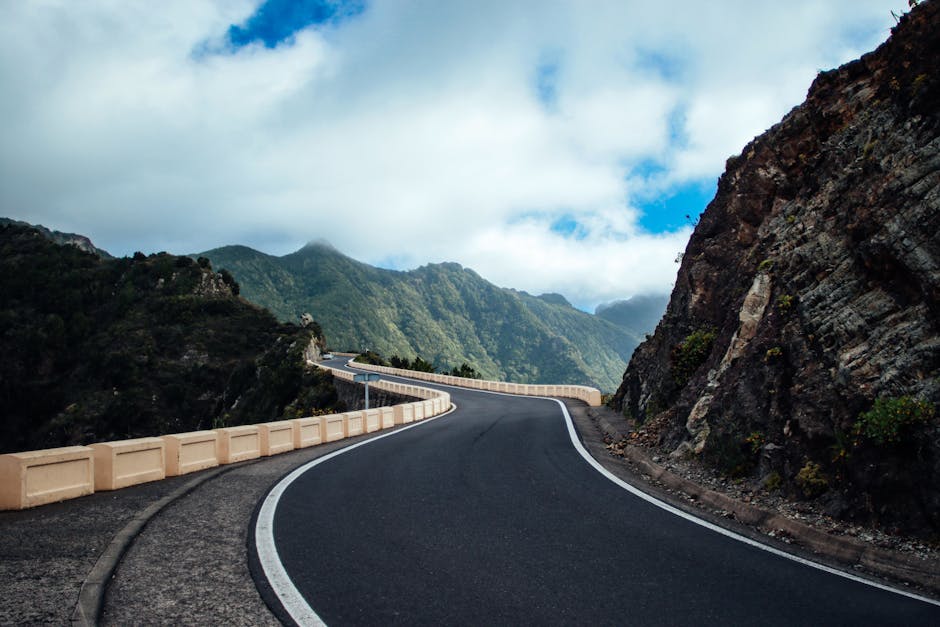
Madeira, the Portuguese archipelago tucked in the Atlantic about 900 kilometres from mainland Europe, is famed for dramatic landscapes, sheer cliffs, laurel forests listed as a UNESCO World Heritage site and lush gardens. One of the most unforgettable ways to grasp the island’s diversity is to explore it by road. Madeira’s scenic drives pack geology, culture and emotion into every mile: cliffside switchbacks above the ocean, windy plateaus swept by clouds, deep valleys where villages seem suspended, and forest tracks winding between pines and giant tree ferns.
This practical, professional and detailed guide gives you a complete run-through of Madeira’s must-do routes, with exact addresses, practical info, prices in euros and opening hours when relevant. The goal is twofold: to provide easy-to-follow driving itineraries, and to give concrete pointers so you can make the most of viewpoints, foodie stops, short walks and photo opportunities. Some roads require caution — narrow lanes, tight hairpins, high passes — but planned right, they unlock breathtaking panoramas that are worth the effort.
In this guide you’ll find clear stages, local tips (best times to avoid fog, recommended parking, public transport alternatives), suggestions for half- or full-day routes, and practical details like opening hours for certain gardens and cable cars, or ticket prices for attractions linked to the drives. The places covered range from iconic coastal lookouts like Cabo Girão to interior passes like Paul da Serra, and the major summits where sunrise turns the island into a theatre of light.
Before you hit the road: check current road conditions (especially in autumn/winter when works or storms can affect routes), rent a suitable vehicle (a compact but stable car, sometimes manual gearbox), carry an offline map or GPS and obey speed limits. Think about others: park safely, use designated viewpoints to admire the scenery, don’t block lanes and, when possible, support local businesses that make these stops so enjoyable.
1. The coastal drive Funchal – Câmara de Lobos – Cabo Girão: ocean views and vertiginous cliffs
Recommended route: start in central Funchal → Avenida do Mar, Funchal → Câmara de Lobos → Cabo Girão → Ribeira Brava or back to Funchal. This coastal stretch combines Funchal’s busy harbour atmosphere, the charm of the fishing village Câmara de Lobos and the visual thrill of the Cabo Girão viewpoint.
Practical starting point: Teleférico do Funchal (lower station)
– Address: Estrada Monumental 190, 9000-302 Funchal, Madeira, Portugal.
– Opening hours: usually open daily around 09:00–18:00 (hours vary by season; cable cars sometimes open earlier in summer).
– Prices: one-way adult around €16.00; return adult around €24.00 (indicative rates; reductions for children/seniors).
This cable car offers a spectacular ascent to Monte and a first panoramic view over Funchal bay.
Câmara de Lobos
– Address: Estrada Regional 101, 9300-012 Câmara de Lobos, Madeira, Portugal.
A colourful fishing village ideal for a coffee break or a grilled fish lunch. Stroll along the harbour and climb up to the Miradouro da Nossa Senhora da Conceição (Miradouro do Cabo) for an overview. Many small restaurants list mains in the €10–20 range.
Cabo Girão
– Address: Estrada Regional ER101 / ER101-3, 9300-164 Câmara de Lobos, Madeira, Portugal. (GPS coordinates often shown on local road signs.)
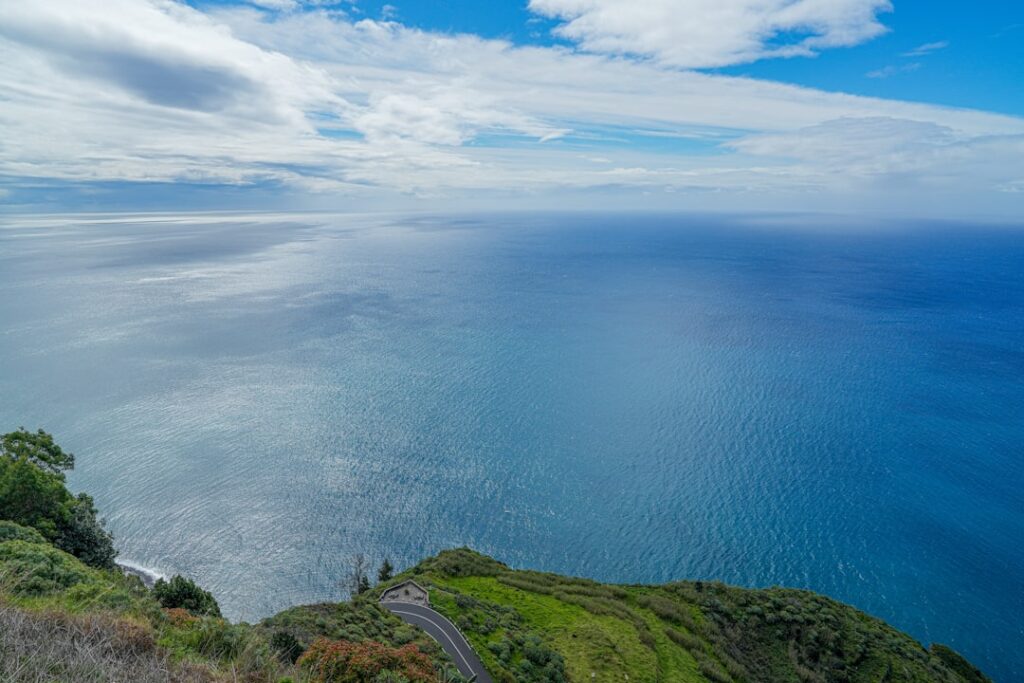
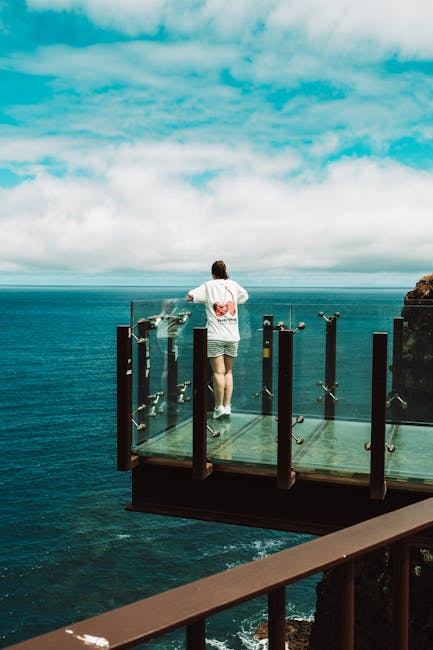
– Description: one of Europe’s highest sea cliffs (about 580 m above sea level) with a glass-floored platform overlooking the ocean. The viewpoint looks down on suspended agricultural terraces and the endless sea.
– Opening hours: viewpoint accessible 24/7; any staffed ticket office follows variable hours (often 09:00–17:00).
– Prices: access to the glass platform is usually free; parking may be charged in season (€1–3).
Local tip: arrive early to avoid tour groups and enjoy calm sea conditions that are perfect for photos. It can be very windy; bring a windproof jacket.
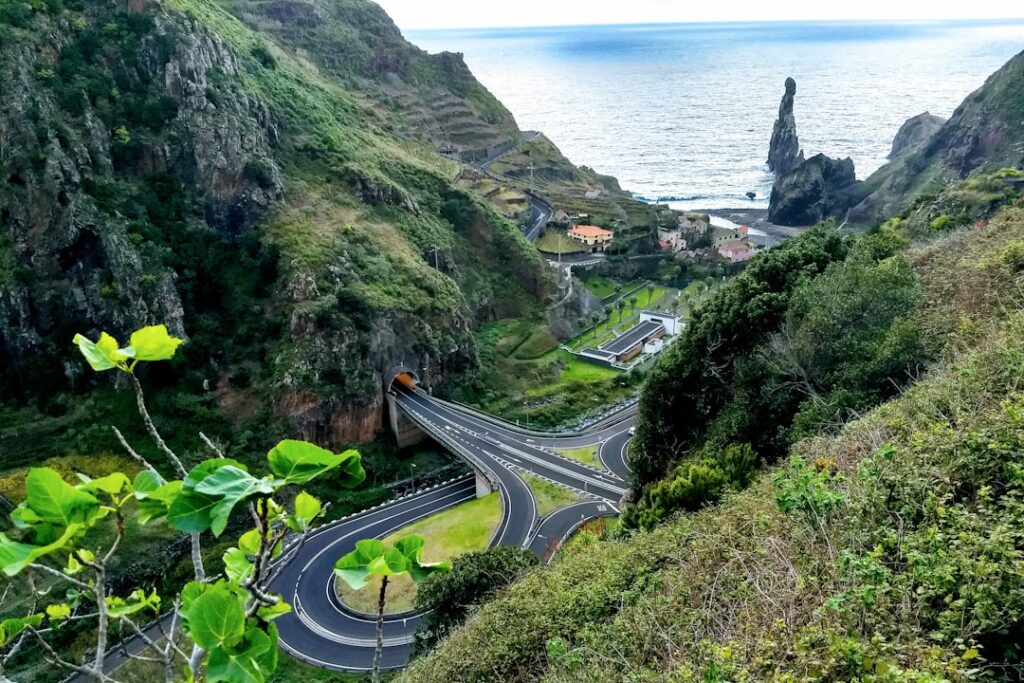
Route and navigation: follow the ER101 west from Funchal; the road hugs the coast and passes through modern tunnels. Driving is straightforward but the road can be busy in high season. For a more scenic alternative, take the ER221 which climbs slightly higher along the coast for different views.
Food stops: Restaurante Vila do Peixe (Address: Avenida 1º de Maio 6, 9300-218 Câmara de Lobos) is known for grilled fish; average mains €12–22. For a drink with a view, try the snack-café at the Cabo Girão viewpoint where drinks and snacks start around €3–6.
Safety and tips: the Cabo Girão viewpoint is secure but avoid getting close to the edge in rainy conditions. Parking near the site can be limited; use designated parking areas. If you’re uneasy with heights, keep a safe distance from the glass platform.
2. From Funchal to Santana via Ribeiro Frio and São Vicente: mountain roads and laurel forests
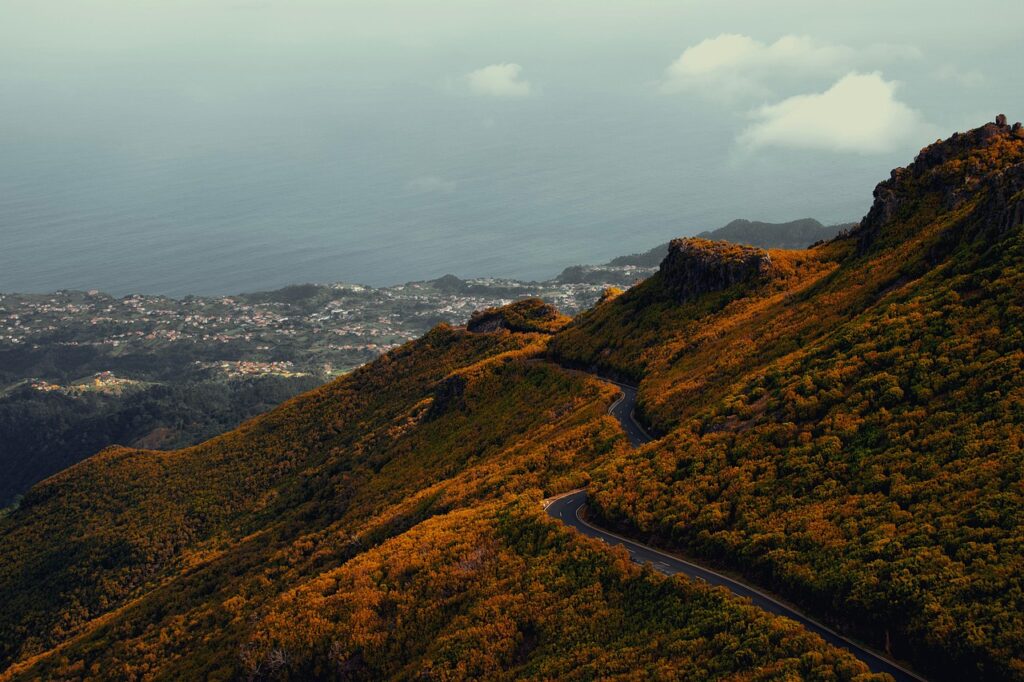
This inland stretch across the north and central-east of Madeira winds through thick forests, humid valleys and ridge-top lookouts. Typical route: Funchal → Estrada Monumental → ER103/ER104 → Ribeiro Frio → São Vicente → Santana.
Ribeiro Frio and the Balcões viewpoint
– Address: Ribeiro Frio, ER103, 9100-087 São Roque do Faial, Madeira, Portugal.
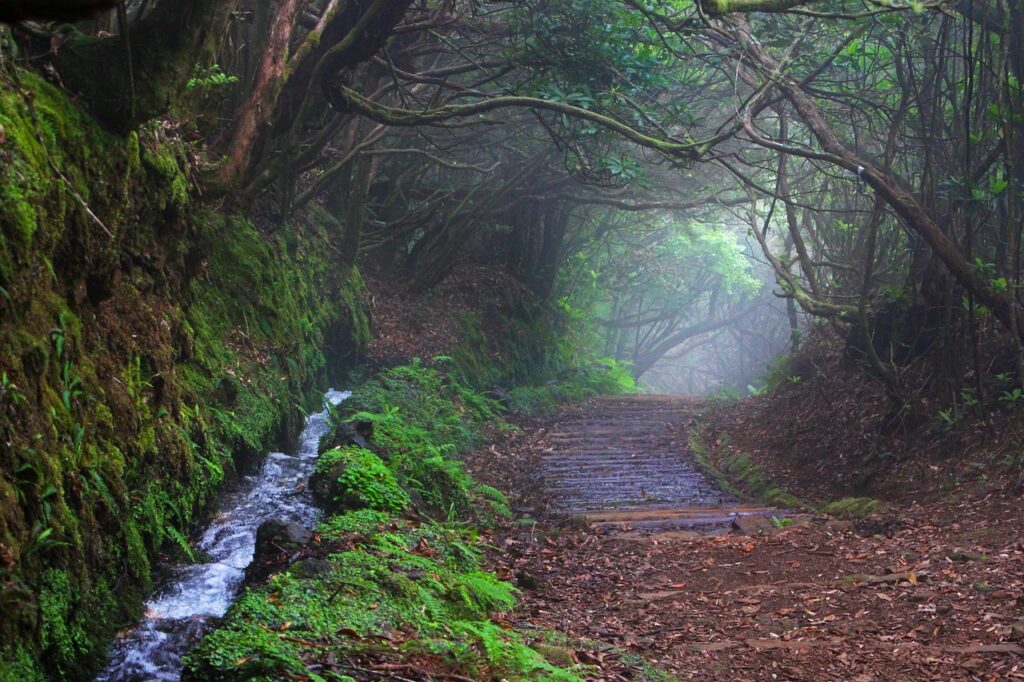
– Description: Ribeiro Frio is famous for its trout farm and the Balcões trail, which leads to a spectacular lookout over a deep valley and surrounding peaks.
– Opening hours: the trout farm and visitor centre are usually open 09:00–17:00; trails are accessible all day.
– Prices: access to the Balcões trail is free; the trout farm sometimes offers paid tastings (around €5–8).
Local tip: the Balcões trail is short and accessible (about 1.5 km round-trip). Visit in the morning to avoid fog that often rolls in later in the day.
São Vicente and the north coast
– Address: São Vicente, 9240-024 São Vicente, Madeira, Portugal.
– Description: a coastal village nestled in a volcanic valley. The roads leading there offer views of terraced agriculture and the sea. In São Vicente, visit the Centro de Ciência Viva (Rua da Igreja 10, 9240-040 São Vicente) to learn about the island’s geology.
– Centre hours: generally 10:00–17:00; closed some days in low season.
– Prices: entry to the Centro de Ciência Viva around €5–8.
Santana and its traditional houses
– Address: Santana, 9230-128 Santana, Madeira, Portugal.
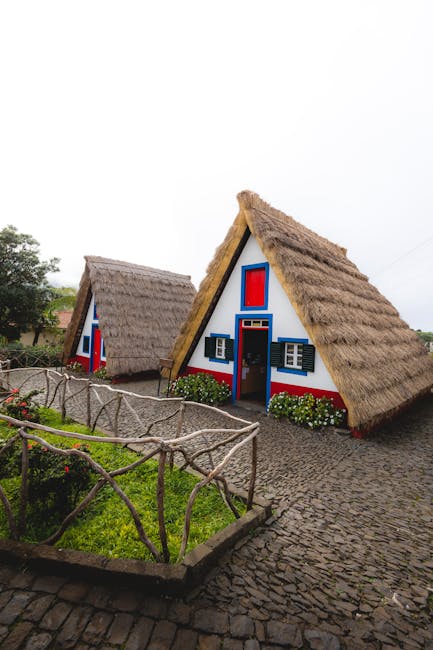
– Description: Santana is world-famous for its traditional thatched-roof houses (Casas Típicas de Santana). The road up offers many photo stops of villages and pastures.
– Hours: the viewpoints and village are open all day; some private attractions have variable hours.
– Prices: village access is free; local museums and attractions cost around €3–10.
Local tip: combine Santana with the Parque Temático da Madeira if you’re travelling with kids. The park is at Caminho do Parque, 9230-131 Santana. Opening hours often 10:00–18:00; adult ticket roughly €15–22 (check locally).
Driving and road style: the route to the north crosses steep hills and modern tunnels. Expect frequent bends and reduced visibility when fog sets in. ER103 and ER101-1 are well maintained but can be narrow.
Practical tips: bring hiking shoes if you plan to walk the levadas or short trails. Carry water, a waterproof jacket and binoculars for wildlife and plant spotting. Stick to marked paths and don’t pick protected flora.
3. The climb by road (and on foot) to Pico do Arieiro and Pico Ruivo: summit sunrise
Madeira’s central plateau is home to its two iconic peaks: Pico do Arieiro (1,818 m) and Pico Ruivo (1,862 m). The road to Pico do Arieiro is an experience in itself, with lunar panoramas, carved tunnels and cols that drop toward the sea.
Pico do Arieiro
– Address: Pico do Arieiro, 9300-100 Funchal, Madeira, Portugal. (GPS: approx. 32.7356°N, 16.9277°W)
– Description: reachable by car via ER103 and local roads. The parking area and visitor centre offer 360° views. Trails to Pico Ruivo (notably trail PR1.2) start here.
– Hours: summit access is free 24/7; tourist facilities (cafeteria, shop) usually open 08:00–17:00 depending on season.
– Prices: site access is free; parking generally free (except during events).
Local tip: for maximum spectacle, set off very early (around 04:00–06:00 depending on season) to catch sunrise. Temperatures can be cool even in summer — bring warm layers.
Pico Ruivo (for hikers)
– Address: Pico Ruivo, trailhead from Achada do Teixeira, 9270-051 Santana, Madeira, Portugal.
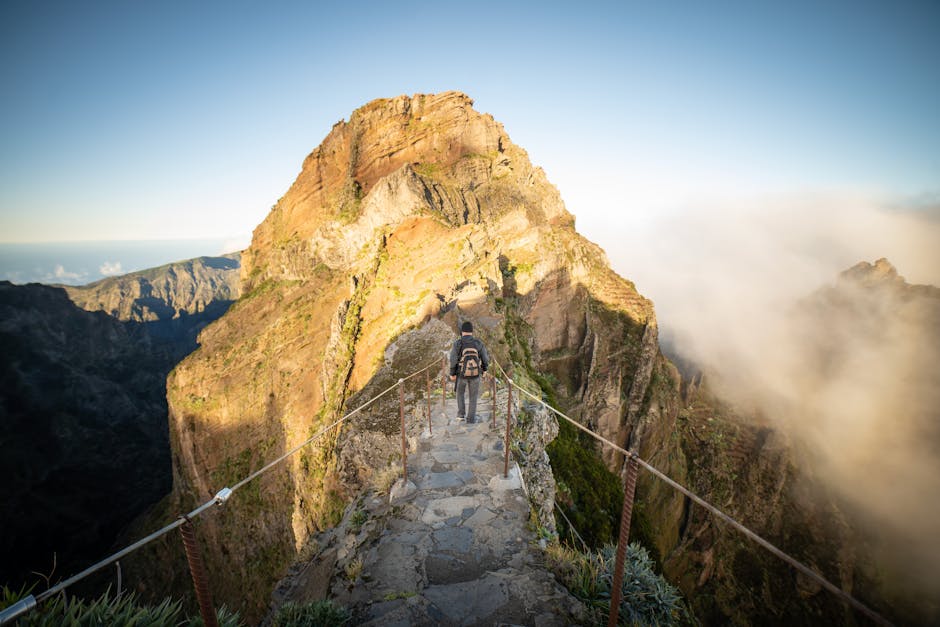
– Description: the island’s highest summit, reachable on a marked trail from Achada do Teixeira or via the challenging ridge from Pico do Arieiro. Views across the ridges and to the sea are unparalleled.
– Hours: trails open year-round but watch the weather.
– Prices: free; some private parking at trailheads may charge a few euros.
Local tip: the Pico do Arieiro → Pico Ruivo traverse is technical (around 6–8 hours return), so wear sturdy boots, bring water and gear. Fog can reduce visibility quickly.
Access and driving: from Funchal take the VR1 then ER110/ER103 towards the island centre. Roads are often steep and winding; travel at off-peak times for easier parking.
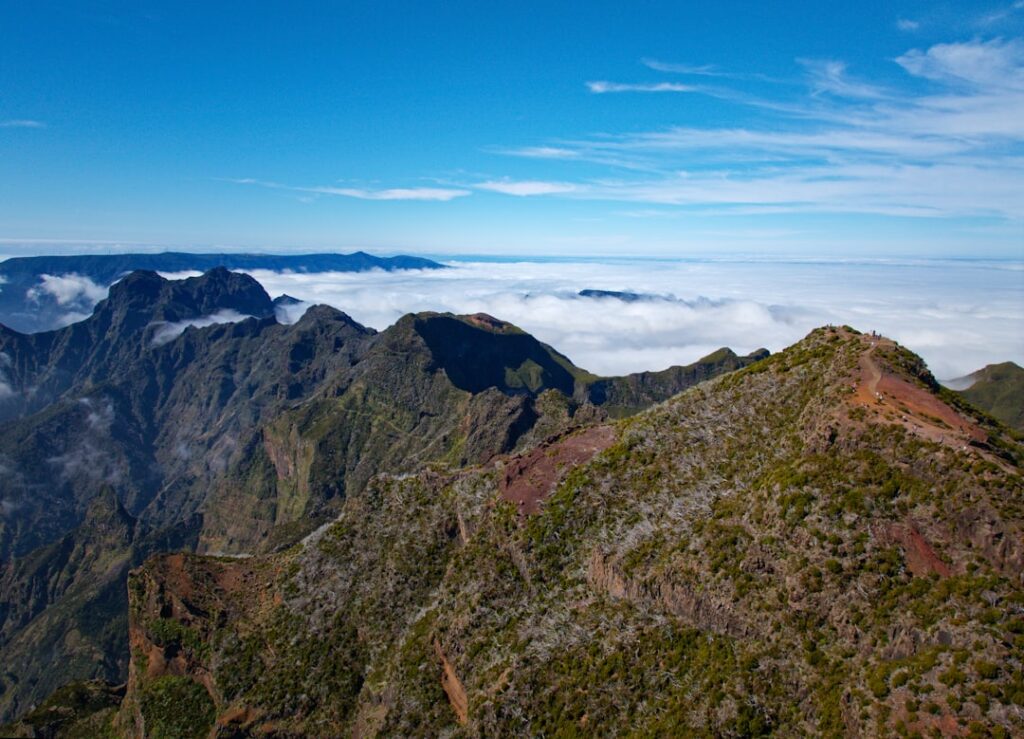
Safety and weather: the peaks are prone to rapid weather changes; check local forecasts and avoid long hikes in bad conditions. Cafés and shelters at Pico do Arieiro offer a welcome break after the ascent.
4. Paul da Serra and the west coast: plateau, mists and agricultural panoramas
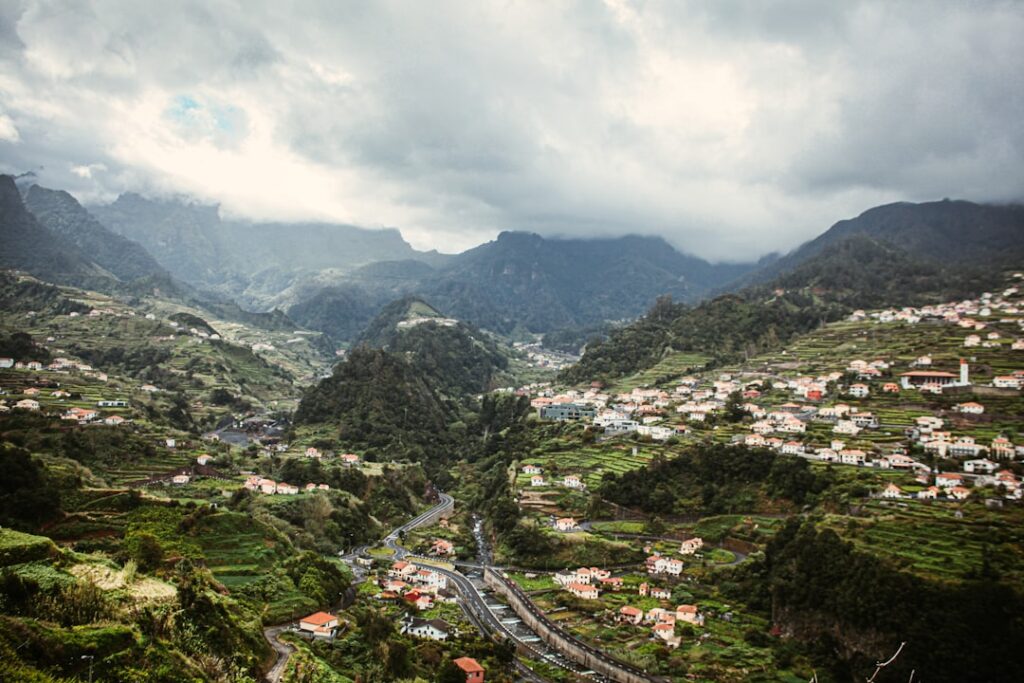
Paul da Serra is the island’s large central plateau and one of the few relatively flat areas in Madeira. The network of roads across it contrasts sharply with the coastal cliffs: wide horizons, patchwork fields, grazing land and windy roads. Suggested route: Funchal → Encumeada → Paul da Serra → Calheta / Porto Moniz.
Paul da Serra
– Address: Paul da Serra plateau, 9370-000 Calheta, Madeira, Portugal (vast area with no single address).
– Description: a karst plateau and wide pastoral area crossed by ER110 and local roads. Stops on the plateau let you watch clouds roll beneath you, heather plains and pastures.
– Opening hours and fees: natural area freely accessible; no tolls.
Local tip: the plateau is often windy and misty; the clearest views are usually in the morning when fog lifts. Bring warm, windproof clothing.
Descent to the west coast: Calheta and Porto Moniz
– Calheta – Address: Calheta, 9370-231 Calheta, Madeira, Portugal.
Calheta has a marina, an artificial sand beach and seaside cafés. Along the road, stop to photograph terraces and mosaic-like farmland.
– Porto Moniz – Address: Porto Moniz, 9270-116 Porto Moniz, Madeira, Portugal.
Porto Moniz is famous for its natural lava-formed pools, perfect for a swim after a morning on the plateau.
– Hours and fees: the public natural pools are accessible 24/7; local parking and facilities may ask for a small contribution (€1–3). Beaches and promenades are free.
Local tip: pair a morning on Paul da Serra with an afternoon of relaxation in Porto Moniz. The descent has tight turns — drive carefully and plan photo stops at viewpoints.
Food and stops: visit the Piscina Natural de Porto Moniz (Rua do Seixal 22, 9270-126 Porto Moniz) for a dip; nearby cafés serve local dishes like espetada (beef skewers) for €10–15. In Calheta, « Casa do Farol » and other waterfront restaurants offer fish and local plates for €12–25.
5. East scenic route: Ponta de São Lourenço and the extreme eastern cliffs
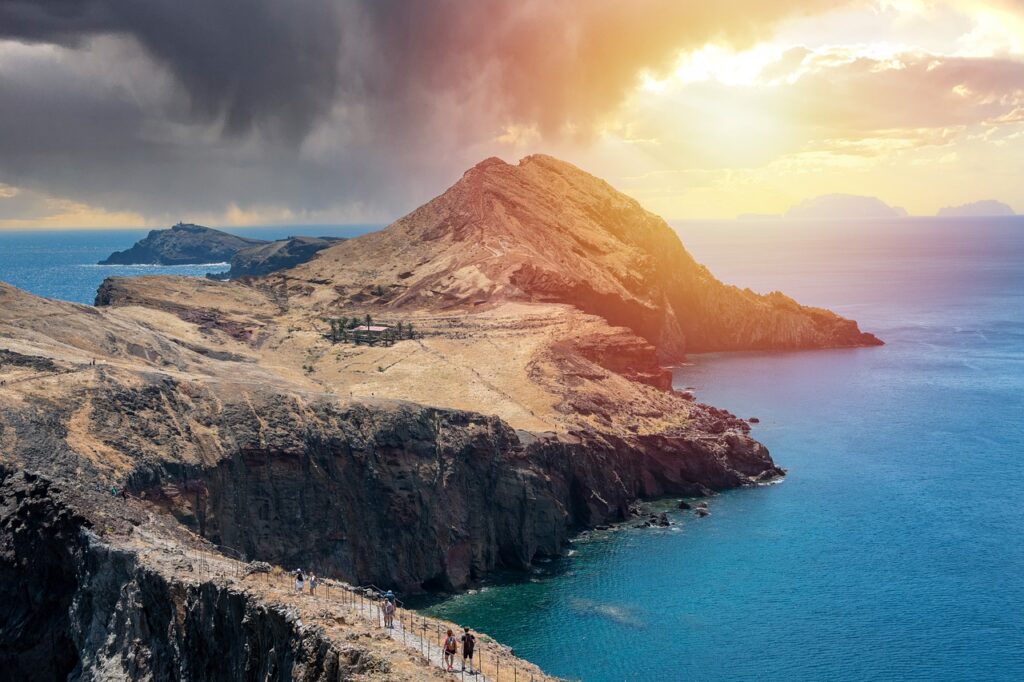
The Ponta de São Lourenço peninsula at Madeira’s eastern tip contrasts strongly with the island’s humid interior: arid landscape, ochre cliffs and long horizontal sea views. It’s an excellent half-day excursion.
Ponta de São Lourenço
– Address: Ponta de São Lourenço, Caminho do Sardinha, 9200-447 Caniçal, Madeira, Portugal.
– Description: a nature reserve with an out-and-back trail of roughly 8 km. The path is well marked and offers views of striking rock formations and the eastern coastline.
– Hours: trail open all day; visitor centre and car parks commonly follow 08:00–18:00 hours.
– Prices: free access; parking sometimes charged (€2–5 depending on season).
Local tip: bring water, a hat and sunscreen — the peninsula is exposed with little shade. Colours are stunning at sunset if you finish the walk late in the day.
Caniçal and the whale museum
– Address: Museu da Baleia do Caniçal, Rua da Igreja 6, 9200-104 Caniçal, Madeira, Portugal.
– Description: a fishing village with a history tied to whaling and today an active fishing port and diving centre.
– Hours: museum often open 10:00–17:00; check locally.
– Prices: entry approximately €3–6.
Local tip: sample fresh seafood at the harbour restaurants; Caniçal is also a departure point for boat trips (dolphin and whale watching) — expect around €35–60 per person depending on duration.
6. Practical tips, road safety and local tricks to enjoy the views
Plan your days: prioritise mornings for mountain roads (less fog) and late afternoons for the coasts (golden light). Weather can change drastically across the island: the north is often wetter than the south. Check local forecasts (online services and weather stations) before setting out.
Car hire and equipment:
– Major agencies in Funchal: Europcar Funchal (Address: Rua da Carreira 42, 9000-014 Funchal), Hertz Funchal (Avenida do Mar 6, 9000-100 Funchal). Rental rates vary by season; expect roughly €25–60/day for a compact car, more for an SUV. Book ahead in high season.
– Insurance: consider full coverage (CDW + glass/tyre protection) due to narrow roads and flying debris.
– Gear: GPS, offline map, headlamp if you’re out for sunrise, warm and waterproof clothing.
Road safety:
– Respect speed limits and signage. Secondary roads may be narrow with little shoulder.
– Use official parking areas for photos. Don’t stop on corners.
– Watch for local buses and experienced drivers who may take tight lines.
Local tips:
– Food break: try bolo do caco (local bread) with manteiga de alho (garlic butter); expect around €1.50–3.00.
– Drink: Madeira wine comes in several styles; budget €8–20 for a good bottle from a cellar.
– Markets: Mercado dos Lavradores (Avenida Arriaga 31, 9000-041 Funchal) is great for local fruit, flowers and crafts; usually open 07:00–19:00.
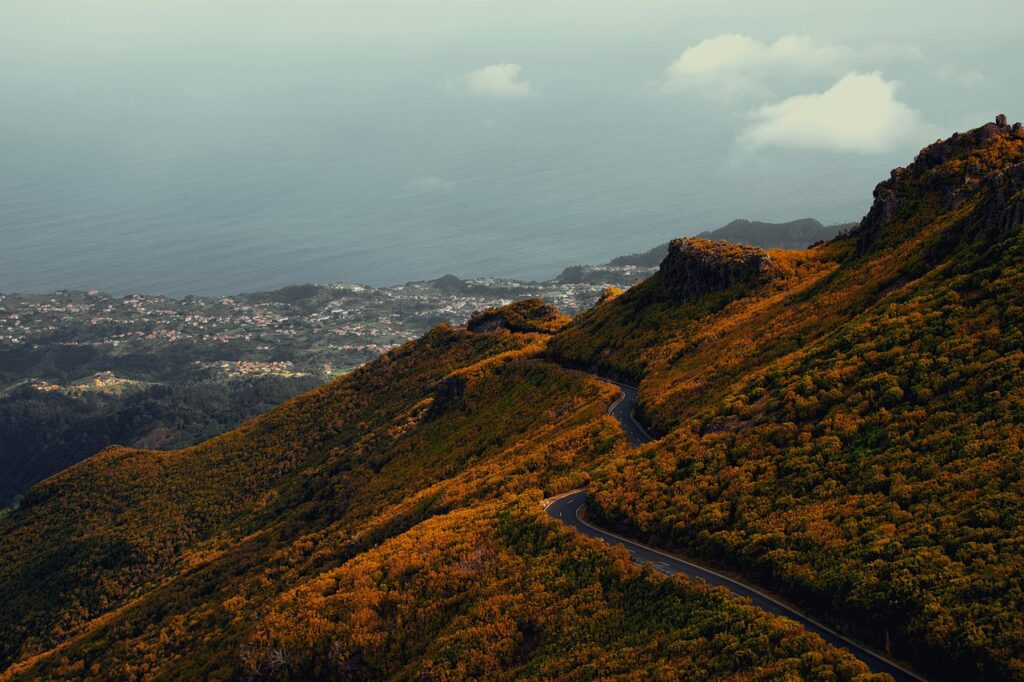
Respect the environment: Madeira has sensitive ecosystems. Stay on trails, don’t take stones or plants as souvenirs, and minimise waste by packing out leftovers. Use existing facilities for breaks and support local sustainable initiatives.
Conclusion: How to get the most from Madeira’s scenic drives
Madeira is best discovered in layers: the sea and its cliffs, the mountains and ridgelines, the plateau and its winds, then the villages with their culture. The island’s scenic roads are invitations to slow down, look and feel. Each route covered here — from the south coast and Cabo Girão to summit climbs, from Paul da Serra to Ribeiro Frio’s damp slopes — offers striking contrasts, photo ops and food stops that make the trip memorable.
To get the most from these routes, plan but stay flexible: weather or an unexpected stop can change your itinerary, and sometimes the best view appears around an unplanned bend. Be prepared: the right vehicle, safety gear and bookings when needed (cable car, certain visits). Use local advice — best photo times, neighbourhood restaurants, safe parking — and respect the island’s fragile environment.
Finally, remember Madeira is more than a backdrop: it’s a lived place with culinary traditions, artisans and landscapes shaped by generations of farmers. Support these communities by buying local, choosing local guides for long hikes and following park rules. Whether you seek the adrenaline of a glass platform over the cliffs, the calm of a forest trail or the glory of sunrise on a summit, Madeira’s scenic drives deliver a journey rich in sensation, discovery and natural beauty.