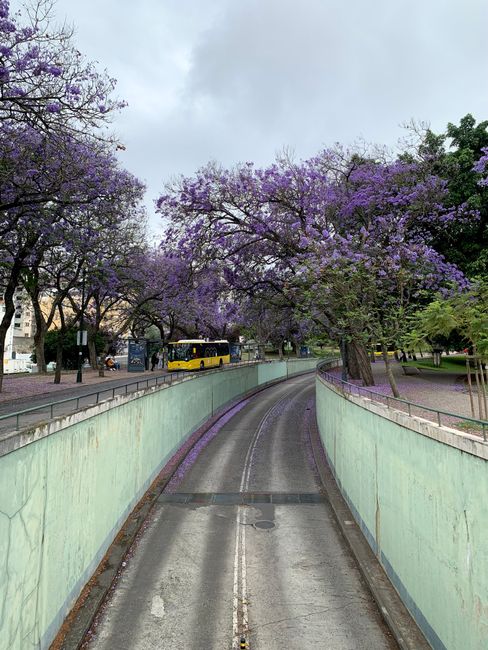






Skip the Car: Why the Bus Could Be All You Need in Madeira
Madeira has a reputation for steep roads, tight switchbacks and a rental car that feels indispensable. Influencers rave about the freedom of a hire car, travel guides push the idea that without a wheel you’ll “see nothing.” Yet there’s another, slower — often richer — and, counterintuitively, more peaceful reality. This “anti-guide” doesn’t ban cars: it dismantles the assumption that driving is the only way to experience Madeira and offers a credible, hands-on alternative built around the island’s public and intercity bus network.
In this long piece I’ll challenge the received wisdom (car = essential) with practical facts and on-the-ground experience: how accessible the bus network is, what the rides feel like, frequency, fares and above all what you gain by leaving the car behind — less stress, more human encounters, the luxury of sipping coffee on a Funchal terrace while the car stays in a car park, and the peace of letting professionals handle mountain driving. I’ll also present concrete alternatives: operator names, exact departure points, sample prices in euros, typical timetables and bus-friendly outings, including precise addresses and local tips to get the most from public transport.
Why write a contrarian piece? Because the pro-car narrative has become a tourist reflex: booking a car as soon as you step off the plane, shaping whole days around a fixed driving route, piling up fatigue and anxiety while following a GPS. In Madeira the landscape is best enjoyed differently: by slowing down, jumping off at a random stop to chat with a fisherman in Câmara de Lobos, tackling a levada reachable by bus, or accepting that two bus rides sometimes beat an hour of intense concentration behind the wheel.
This guide is honest: a car still makes sense for certain goals (remote routes, super-flexible schedules for dawn photographers, large families with luggage and a stroller). But I argue that for most visitors — hikers, couples, solo travelers, seniors — the bus is a viable and often superior option. I describe the concrete reality of the network: who the main operators are, where to buy a ticket, roughly how much it costs, typical departure times, and above all which excursions work without a car. You’ll find concrete alternatives with names and addresses, plus local tips to optimize your days. If you’ve already booked a car, read on: you might cancel, return it at the airport and save money and stress.
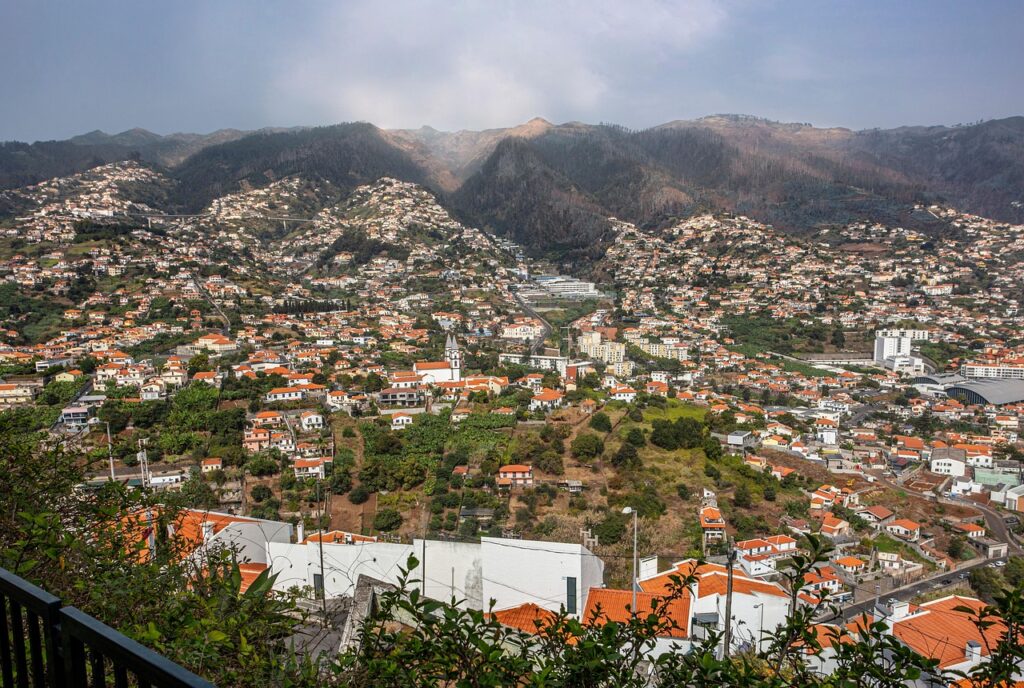
1) Why the Car Is Overrated in Madeira (and the Real Downsides)
The car looks attractive for three reasons: autonomy, apparent speed and a feeling of control. But in Madeira those advantages come with real trade-offs. Roads are narrow, full of hairpins, and often lack much of a hard shoulder. Traffic around Funchal and paid parking push the true cost of a rental up — and your stress levels with it. Visitors often report: tense driving, navigation errors in tunnels, rushed decisions on cliff-edge stretches. It’s not just about ability: the concentration required is tiring, and fatigue ruins the experience.
Next, the financial cost is frequently underestimated. Beyond the base rental (which can fluctuate between €20 and €60 per day depending on season), you need excess insurance, fuel, possible tolls, parking (in central Funchal paid car parks like Parque de Santa Catarina typically charge between €0.70 and €1.50 per hour) and the psychological wear-and-tear of the trip. Finally, some secondary roads have parking restrictions or are hard to access for wider vehicles.
From an ecological standpoint, Madeira’s fragile island ecosystems suffer from more cars. More vehicles mean more local pollution and tourism impact. Buses reduce the per‑passenger footprint. But it’s not only about eco-consciousness: choosing the bus changes your experience. You’ll see the coast differently, you’ll have time to read the map, chat with locals, and hop off at a random stop for a village coffee.
2) Madeira’s Bus Network: Who, Where, When and How to Use It
Madeira has a well-organized public transport network, good enough for many classic excursions. The two main operators are Horários do Funchal (urban lines and some intercity services from Funchal) and Rodoeste (intercity network serving the west and northwest). Start planning at the Terminal Rodoviário do Funchal (Funchal Bus Station): exact address — Avenida do Mar e das Comunidades Madeirenses, 9000-107 Funchal. This is the hub where you can buy tickets and get up-to-date timetables.
Horários do Funchal — headquarters and ticket office:
– Name: Horários do Funchal
– Main sales point: Ticket counter, Terminal Rodoviário do Funchal, Avenida do Mar e das Comunidades Madeirenses, 9000-107 Funchal
– Website: https://www.horariosdofunchal.pt
– Hours: Urban lines typically run between 06:00 and 23:00, with variable frequencies (every 15–30 minutes on central daytime routes).
– Price: Indicative single urban fare €1.60 (single-ticket; reduced fares available with local travel cards).
Rodoeste — intercity (west/northwest):
– Name: Rodoeste — Empresa de Automóveis Rodoeste, S.A.
– Sales point (Funchal): counter at Terminal Rodoviário do Funchal; secondary office in Câmara de Lobos
– Website: https://www.rodoeste.pt
– Hours: long-distance links (Funchal ↔ Calheta ↔ Porto Moniz ↔ São Vicente) generally run from 06:00 to 19:00; reduced frequency on distant segments (1 to 5 departures per day depending on the line).
– Indicative prices: Funchal ↔ Câmara de Lobos ≈ €2.00; Funchal ↔ Calheta ≈ €4.50–€6.00; Funchal ↔ Porto Moniz ≈ €6.00–€9.00 (prices vary by season and distance).
Practical tips: buy tickets at the counter to avoid confusion at stops; keep some change. Check official websites and the timetables posted at the station for exact daily times. Buses can be punctual but may be affected by roadworks or weather. Ask the driver for the best stop for your hike or viewpoint — drivers often know less-crowded alternatives.
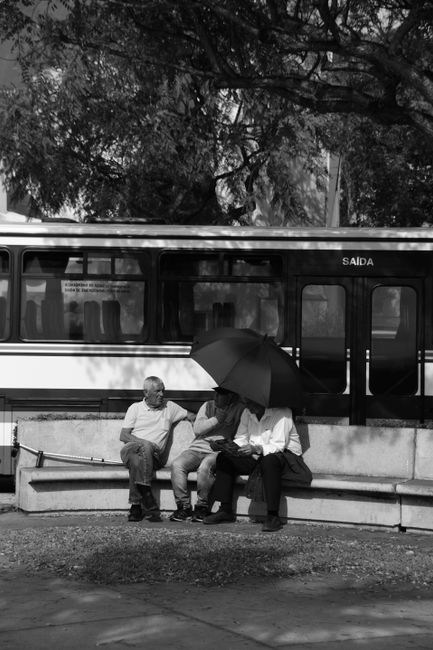
3) Concrete Car-Free Itineraries: Three Trips to Try
Here are three specific excursions you can realistically do without a car, each with practical details so you can head out with confidence. These routes cover the south coast, the wild west and the island’s mountainous interior — three sides of Madeira that the bus serves well.
Excursion A — Funchal to Câmara de Lobos (half-day)
– Why: a colorful fishing village, viewpoints, the famous poncha.
– Departure: Terminal Rodoviário do Funchal, Avenida do Mar e das Comunidades Madeirenses, 9000-107 Funchal.
– Operator: Horários do Funchal / Rodoeste (depending on the service).
– Price: ≈ €2.00 one way.
– Frequency: every 15–30 minutes during the day.
– Duration: 15–20 minutes.
– What to do: get off at « Câmara de Lobos, Largo da Eira » for a bay-side stroll, stop at « Restaurante O Lagar » (Rua da Eira 42, 9300-144 Câmara de Lobos) to try a poncha (≈ €2.50–€4.00) and grilled fish (mains €8–€15). Return along the coast for a spectacular sunset.
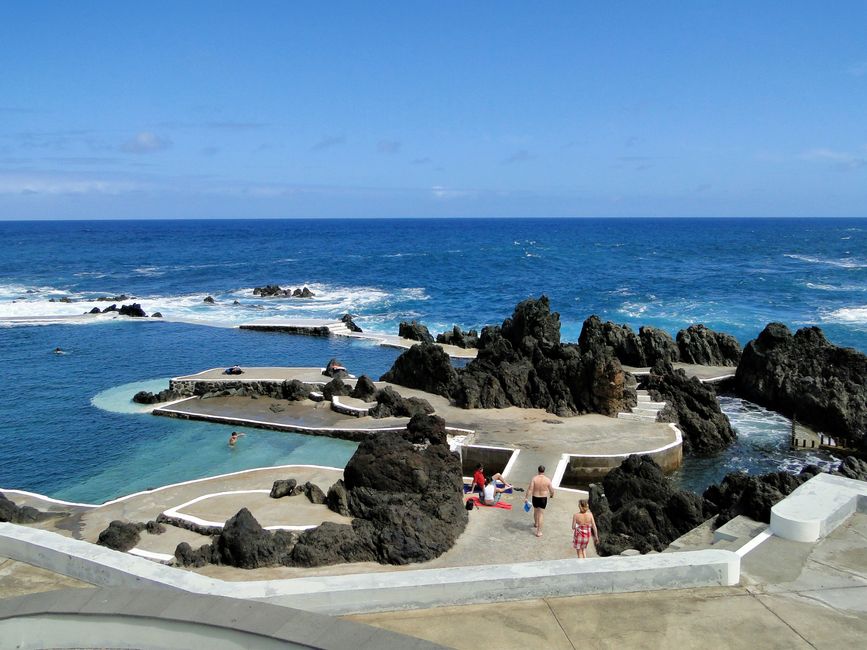
Excursion B — Funchal to Porto Moniz (full day)
– Why: natural lava swimming pools in Porto Moniz, dramatic coastal scenery.
– Departure: Terminal Rodoviário do Funchal.
– Operator: Rodoeste (intercity westbound line).
– Price: ≈ €7.00–€9.00 one way (indicative).
– Timetable: morning departures (around 07:30–09:00), return possible in the afternoon (last departures vary by season, around 17:00–18:00).
– Duration: about 1h30–2h depending on the route.
– Useful address: Piscinas Naturais do Porto Moniz, Avenida dos Jornais, 9270-111 Porto Moniz (free access to the pools; some paid activities available).
– Tip: bring swimwear and a towel; buy a return ticket if available to secure your trip back.
Excursion C — Funchal to Santana (cultural day trip)
– Why: traditional thatched houses, easy hikes.
– Departure: Terminal Rodoviário do Funchal.
– Operator: Rodoeste / intercity links.
– Price: ≈ €6.00–€8.00 one way.
– Hours: morning departures, returns in the late afternoon.
– Useful address: Santana (village), Parque Temático da Madeira (Rua João Gonçalves Zarco, 9230-106 Santana) — park entry ≈ €9.00–€12.00 (variable).
– Tip: combine seeing the traditional houses with a short levada walk accessible from the village; check return times so you don’t get stuck with a late or infrequent bus.
4) Local Tips to Make Bus Travel Better — comfort, safety, timing
Taking the bus in Madeira isn’t entirely improvable: a few local practices boost the experience. First, structure your days in sequences: morning on the south coast (where services are more frequent), afternoon for west or north highlights. Avoid very late trips if you need to return to Funchal: some intercity services have relatively early last departures (around 17:00–18:30 depending on the line).
Transport and luggage: Rodoeste and Horários do Funchal accept standard bags; for oversized luggage check at the counter. If you’re hiking, wear waterproof boots and carry a small kit (water, snacks). In high season, leave early: you’ll avoid crowds at viewpoints and get a guaranteed seat.
Interacting with locals: drivers are generally helpful — ask them which stop is closest for a levada, viewpoint or trail. Locals appreciate any Portuguese effort, even basic phrases (good morning = « bom dia », thank you = « obrigado/obrigada »).
Safety and weather: weather can change quickly with altitude. Pack a windproof layer, especially if you’re taking buses up into higher areas. Tunnels are common — be ready for changes in signage and follow roadside instructions. And always double-check return times: if there’s no suitable connection, plan B = local taxi (budget €20–€60 depending on distance).
Conclusion — who the bus is enough for, and why sometimes saying no to the car is a luxury
Leaving the car behind in Madeira isn’t a forced restriction: it’s a cultural and practical choice. For travelers who want to slow down, observe, chat, taste local life and let serendipity guide them, the bus is often the best option. It cuts costs, lowers stress and brings you face-to-face with the island and its people. The downsides of driving — fatigue, extra cost, hunting for parking — carry a lot of weight for relatively little added value for most typical tourist visits.
That said, I stay balanced: a car remains relevant for specific needs — photographers chasing remote sunrises, large families with packed itineraries, or travelers whose routes include roads not served by buses. But for common visits (Câmara de Lobos, accessible levadas, Porto Moniz, Santana), the bus network run by Horários do Funchal and Rodoeste is sufficient, often better than you’d expect. As a concrete alternative, head to Terminal Rodoviário do Funchal, Avenida do Mar e das Comunidades Madeirenses, 9000-107 Funchal; check the counters for Horários do Funchal (https://www.horariosdofunchal.pt) and Rodoeste (https://www.rodoeste.pt) for the day’s timetables and fares. Prices are modest compared with renting a vehicle, and the schedules let you build full, rewarding days without a car.
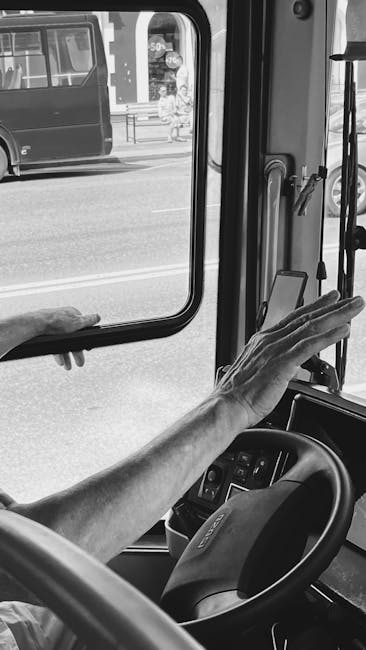
Finally, keep an explorer’s mindset: embracing the bus’s slower pace opens the door to unexpected encounters, chance discoveries and the freedom to change plans without guilt. You’ll find Madeira viewed from the window of a bus winding along cliffs and through laurel forests gains poetry and depth. So next time you plan your trip, try a 100% bus day: you may be surprised — and you might make your stay more authentic and more serene.